Thursday, 2 July 2015

Linus Pauling love with Vitamin C

http://profiles.nlm.nih.gov/ps/access/mmbbkt.pdf

Benefits of Vitamin C


Vindication For Linus Pauling
Reprint from Life Extension Magazine®, May 2002

By William Faloon
Vindication For Linus Pauling
A new government study says that radioactive fallout from nuclear weapons testing has caused at least 15,000 cancer deaths in the United States. This report was prepared as a joint effort by the National Cancer Institute and Centers for Disease Control and Prevention. Here is a chilling revelation from this report:
“Any person living in the contiguous United States since 1951 has been exposed to radioactive fallout, and all organs and tissues of the body have received some radiation exposure.”
For those who don’t know, more than 2,000 nuclear tests have been conducted worldwide since the first nuclear bomb was built. The latest government report considered only above-ground tests that took place between 1951 and 1962. This study uncovered intense radioactive “hot spots” in the continental United States all the way from California and Washington to Vermont, New Hampshire, and North Carolina.1
This report of 15,000 cancer deaths, however, is but preliminary. The full study is still being withheld from the public. Critics are accusing the Federal government of slowing the release of this information to minimize the consequences.
For decades, the Federal government contended that radioactive fallout from nuclear testing was harmless. Government propaganda films in the 1950s even showed American children playing in fresh radioactive ash to demonstrate that it was as “safe as snow.”1
Now that the lethal consequences of the government’s deceit are being exposed, we commemorate the scientist who risked imprisonment for organizing protests that eventually caused the United States and [the former] Soviet Union to ban above-ground nuclear testing.

Linus Pauling: The Scientist

Linus Pauling: The Scientist

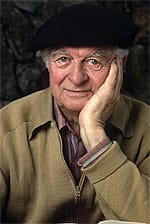
Linus Pauling is the only person to ever win two undivided Nobel Prizes. The New Scientist magazine ranked Dr. Pauling as one of the twenty greatest scientists to ever live, an honor shared with such figures as Albert Einstein, Charles Darwin, and Isaac Newton.
Dr. Pauling’s research focused primarily on physical chemistry. In 1939 he published The Nature of the Chemical Bond and the Structure of Molecules and Crystals and was awarded the Nobel Prize in Chemistry in 1954.
During World War II, Pauling participated in scientific enterprises deemed vital to the protection of the country. Early in the war he was a consultant to the National Defense Research Commission and later became a member of the Research Board for National Security. For his contributions, which included work on rocket propellants, on an oxygen deficiency indicator for pressurized space, such as that in submarines and aircraft, and on a substitute for human serum in medical treatment, he was awarded the Presidential Medal of Merit in 1948.
Pauling’s interest in the “behavior” of molecules led him from physical chemistry to biological chemistry. Dr. Pauling’s research into amino acids resulted in the development of the first substitute for blood plasma.
In 1950, Dr. Pauling constructed the first satisfactory model of a protein molecule, a discovery that has implications for the understanding of the living cell. He studied and published papers on subjects as diverse as the effects of blood cell abnormalities, the relationship between molecular abnormality and heredity, the possible chemical basis of mental retardation, the functioning of anesthetics, the relationship of vitamin C deficiency to heart disease, etc.
Many of today’s scientific and medical breakthroughs emanate from Linus Pauling’s pioneering research in the fields of both physical and biological chemistry.

How Linus Pauling Got into Trouble

Linus Pauling knew that radioactive fallout–generated free radicals would cause cancer and other diseases in humans. Pauling joined with Albert Einstein and five others to form the Emergency Committee of Atomic Scientists. Their mission was to inform the public about the dangerous consequences that nuclear weapons and nuclear testing held for civilization.
In 1957, Pauling wrote a scientific appeal petition calling for a nuclear test ban treaty and distributed it throughout the scientific community. He soon gathered over 9,000 signatures from 49 countries, including 2,000 American scientists. In 1958, Pauling presented the petition to the Secretary-General of the United Nations, announcing that it represented the general consensus of the world’s scientists and their plea for a ban on future nuclear testing.
Pauling gave hundreds of lectures against nuclear weapons testing and war. Unfortunately, he toured during a time of heightened Cold War suspicions and was marked a Communist supporter. The Federal government refused to give Pauling a passport, thus denying him the opportunity to attend international scientific conventions. Pauling was twice subpoenaed to appear before congressional committees investigating anti-American activities to declare that he was not a Communist. On October 11, 1960, Pauling was threatened to be held in contempt of Congress because he refused to reveal the names of those who helped circulate his petition to ban nuclear testing.
Despite unrelenting governmental oppression, Pauling remained undaunted and continued his crusade by writing a draft resolution for a nuclear test ban treaty. He sent letters and copies of his resolution to both President Kennedy and Premier Khrushchev. The two superpowers eventually agreed on a limited test ban treaty, one that was strikingly similar to Pauling’s. The treaty went into effect on October 10, 1963, the very day it was announced that Pauling was to receive his second Nobel Prize.

Too Far Ahead of His Time

By disseminating his knowledge about the lethal dangers of radioactive fallout, Pauling became a target of government persecution, harassment in the press, and charges of working for the enemy. He could have been jailed for refusing to provide Congress with the names of those involved in gathering more than 9,000 signatures for the scientific petition to ban above-ground nuclear testing.
We are now learning that the government knew about the effects of above-ground nuclear testing, but covered it up. In the 1950s for example, government officials notified suppliers of photographic film of expected fallout patterns so they could protect their film, but did not share the information with milk producers. Many children drank this radioactive contaminated milk.
A 1997 report by the National Cancer Institute indicated that farm children who drank goats’ milk in the 1950s in high fallout areas were as severely exposed as the worst exposed children after the 1986 Chernobyl nuclear plant accident. Death rates from leukemia and other cancers, and diseases caused by the Chernobyl accident, are estimated to kill tens of thousands in the future.2

Too Far Ahead of His Time
Environmental groups are calling for the US government to expand its compensation program for test site “downwinders” to include hot spots thousands of miles from the test sites, and to formulate and implement a comprehensive response to the public health threat posed by the fallout.
This preliminary report about the lethal effects of nuclear testing has alarmed some members of Congress, including Sen. Tom Harkin of Iowa. “What we know is maybe the tip of the iceberg here,” Harkin said. “We know that there’s been upwards of perhaps 15,000 deaths that are attributable to these nuclear tests.” Congress received the preliminary report last August. The report was endorsed by the prestigious Institute for Energy and Environmental Research, but the government has yet to formulate a public health response.
“People have a right to know if they were exposed, where the big areas of fallout were, and they need to be screened and told what to do to protect their health,” Senator Harkin said.
It is interesting to note that what Senator Harkin advocates today would have been considered heresy in the 1950s, since the government’s official position at that time was that radioactive fallout was harmless.
Forty-five years ago, Dr. Linus Pauling formulated a public health response to eradicate this problem, but the Federal government chose instead to persecute this brilliant scientist and humanist so that the practice of raining radioactive fallout throughout the United States could continue.
As is too often the case, when the government makes a criminal accusation against a political dissident (in this case Linus Pauling), history later shows that it was the government itself that was involved in the sinister activities. What could be more anti-American than inflicting cancer on 15,000 innocent people?
Comment from The New York Times, February 28, 2002
How Linus Pauling Got into Trouble
Dr. Linus Pauling’s warnings of the increased incidence of cancer due to the fallout from atmospheric atomic weapons testing & the emissions of fission reactors were largely ignored by the mainstream media during his lifetime. Finally, in 1997, 40 years after his petition to the United Nations was denounced as “pro-communist,” the US National Cancer Institute announced that large numbers of people, especially children, were exposed to dangerous levels of radiation from fallout. The damage done by the US, British, & USSR testing until 1963, of testing by France & China and, more recently, by Pakistan, India, et al, dispersed vast amounts of long-lived radioactive materials into the atmosphere. Since much of this consists of elements such as iodine, cesium, strontium, etc., which falling into the oceans, are ingested by oceanic organisms such as algae, plankton, etc. &, falling onto the ground, are taken up by grazing animals such as sheep & cattle, it becomes increasingly concentrated the higher it goes up the food chain. While we have until now managed to avoid the catastrophe of nuclear war, it appears that those responsible for protecting the security of our respective nations have, in fact, poisoned life on Earth for years to come.

Linus Pauling’s Theory about Vitamin C and Heart Attack

Linus Pauling never stopped taking controversial positions. In the 1960s, he began to investigate the role that vitamin C played in human health. Pauling postulated that a cause of atherosclerosis is a lifelong vitamin C deficiency.
One of the great misfortunes of human evolution, Pauling explained, was when our human ancestors lost their ability to manufacture vitamin C. Ever since proto-humans moved out of fruit- and vegetable-rich habitats, Pauling said, they have suffered great deficiencies of vitamin C. Pauling recommended that people make up for this deficiency with daily doses of vitamin C much greater than the 60 mg recommended by the government.
Pauling laid out a molecular basis to explain vitamin C’s connection with lipoprotein-a, a substance whose levels in the blood have been linked to cardiovascular disease. Lipoprotein-a is also a major component of the plaques found in the blood vessels of atherosclerosis patients.
Pauling has published studies asserting that lipoprotein-a is a surrogate for vitamin C, serving to strengthen blood vessel walls in the absence of adequate amounts of the vitamin in the diet. Pauling noted that animals that manufacture their vitamin C have very little lipoprotein-a in their blood.
Pauling was convinced that high doses of vitamin C could help prevent the onset of cardiovascular disease, inhibiting the formation of disease-promoting lesions on blood vessel walls and perhaps decreasing the production of lipoprotein-a in the blood.
Linus Pauling’s position on vitamin C once again put him under intense criticism, this time from the medical establishment who asserted that vitamin C had nothing to do with heart attack risk.

The only reason Linus Pauling was not thrown in jail for promoting the benefits of vitamin C is that he did not sell it. Before 1994, the FDA prohibited distributors of vitamin supplements from making health claims.

Linus Pauling Again Exonerated

Over the past 12 years, a large volume of published studies has supported Linus Pauling’s position on the role of vitamin C and heart disease. Many of these studies look at the beneficial effects that vitamin C has on the arterial wall, but what is most impressive are human epidemiological studies showing that people with high levels of vitamin C live longer and suffer fewer heart attacks compared to those with low vitamin C.
One of the first human studies that substantiated the benefits of vitamin supplements was announced in 1992 and showed that men who took 800 mg a day of vitamin C lived six years longer than those who consumed the FDA’s recommended daily allowance of 60 mg a day. This ten-year study, published in the journal Epidemiology,3 showed that high vitamin C intake extended average life span and reduced mortality from cardiovascular disease.
A compelling report that high-potency supplements extend life span in humans was published in the August 1996 issue of the American Journal of Clinical Nutrition. This study involved 11,178 elderly people, who participated in a trial to establish the effects of vitamin supplements on mortality. When the effects of vitamin C and E were compared, overall mortality was reduced by 42%. What made these findings significant was that the study compared people who took low potency “one-a-day” multiple vitamins to those who took higher potency vitamin C and E supplements. Only the participants taking high-dose vitamin C and E supplements benefitted.4
A study published in the British Medical Journal evaluated 1,605 randomly selected men in Finland aged 42 to 60 years between 1984 and 1989. None of these men had evidence of pre-existing heart disease. After adjusting for other confounding factors, men who were deficient in vitamin C had 3.5 times more heart attacks than men who were not deficient in vitamin C. The scientists’ conclusion was, “Vitamin C deficiency, as assessed by low plasma ascorbate concentration, is a risk factor for coronary heart disease.”5
In a study published last year in The Lancet, researchers at Cambridge University in England looked at serum vitamin C and how long people lived. People who had the lowest levels of vitamin C were twice as likely to die compared to those with the highest serum vitamin C levels. This study was based on the findings from over 19,000 people.6

Does Vitamin C Cause Kidney Stones?

Linus Pauling came under attack by medical doctors who asserted that vitamin C caused kidney stones. Based on Dr. Pauling’s molecular knowledge of chemistry, he meticulously rebutted these unfounded allegations. What Dr. Pauling lacked in the 1960s and 1970s, however, were human studies to validate that vitamin C did not increase kidney stone risk.
Dr. Pauling was exonerated again by a report from Harvard Medical School that showed no increased risk of kidney stones when evaluating 85,557 women over a 14-year study period. This report, published in the April 1999 issue of the Journal of the American Society of Nephrology, showed that women who consumed 1,500 mg a day or more of vitamin C were no more likely to develop kidney stones than women who consumed less than 250 mg of vitamin C a day. The study did reveal that women who consumed 40 mg or more of vitamin B6 were 34% less likely to develop kidney stones compared to women taking fewer than 3 mg a day of B6.7
The only reason Linus Pauling was not thrown in jail for promoting the benefits of vitamin C is that he did not sell it. Before 1994, the FDA prohibited distributors of vitamin supplements from making health claims.

Can We Stop Persecuting Today’s Linus Paulings?
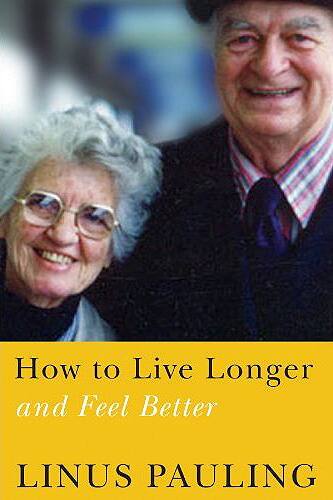
How to Live Longer and Feel Better
Those with new ideas often face fierce attack by the establishment and the Federal government. A recent example was the announcement that human embryonic stem cells had been produced and that there is now an opportunity to cure many of today’s lethal diseases.
You would think that the scientist who made this remarkable discovery, Dr. Mike West, would be proclaimed a hero. Instead, government leaders immediately vowed to pass new laws to make it a crime to create embryonic stem cells for therapeutic cloning purposes. In Senate hearings, scientists and people afflicted with disease are appealing to lawmakers to not ban therapeutic cloning research.
Our concern is that only a miniscule number of brilliant minds like Linus Pauling are ever born. When Linus Pauling stated that radioactive fallout caused cancer in humans, he was ridiculed, persecuted and almost incarcerated. Now 45 years later, Pauling has been proven right. This vindication does nothing for the 15,000 Americans who have perished from radioactive fallout-induced cancer.
Today, there are pockets of exceptional intelligence that are stifled by bureaucratic red tape. In order to create the scientific renaissance needed to radically extend the healthy human life span, we must break down the barriers that suppress implementation of new ideas.
We as citizens and Life Extension® members must protect those brilliant minds (the Linus Paulings of today) who may be too intimidated to risk their personal freedom to bring forth the scientific truth.

Tuesday, 7 April 2015

Analysis of Malaysian Edusaving Plan

http://voyager8.blogspot.com/2013/12/does-it-worth-to-put-saving-in-skim.html


Tuesday, 27 January 2015

Managing files in the cloud

http://www.pcworld.com/article/2098244/cloud-storage-made-simple-how-to-integrate-it-with-your-workflow.html

It is easier for Android. Just use ES File manager. For windows, it is more complicated.


Friday, 23 January 2015

The best watch

http://www.macworld.com/article/2874167/report-apple-watch-aims-to-last-19-hours-per-charge.html

Casio TS-100

 https://blogger.googleusercontent.com/img/b/R29vZ2xl/AVvXsEjQuDls5lkc7jtFvy2zPz4SiSdqen19VtsT_9WJufS1lsN3rQZ9QkM8KyyDx9nDJir4E9ckEQ_oJggEcBHYlRZHZEZXI98ilMzu2kFGKssnPPiNtGuQcvV2KdYZ5UjgEzD7qxR_SSUTyts9/s1600/casio_ts100_512.JPG

But I had my perfect watch but unfortunately Casio does not produce it anymore, let alone improve it.
Its battery lasts for 5 years and yet can give accurate time and temperature. It can even predict temperature anywhere in the world anytime, with a world map as well.

With its alarms, it can become an organiser but with the extra information of temperature which is missing in many organisers. I used it to plan my trips to Mecca and Hongkong. I cannot find the information from my PC in those days. Even with current PC or Windows tablets, it is difficult to get the data and therefore takes too much time compared to the information that I can get from my TS-100 watch.

Even my smartphone is not that smart as well. Even with so many keys, they are difficult to find the data that I need quickly with sufficient accuracy for immediate use. A watch is much easier to see, take out. Even with only a few buttons, we can get the information much faster, after all, we don't change cities that much. Once we target a city, we will get the information from that city as well.

The secret to the success of the TS-100 is the use of database instead of downloading the data. World maps and temperature data is very useful and widely available. We don't need detailed data. By providing data for various places on earth, we can extrapolate to nearby cities. After all, all the nearby cities have similar temperature and time zones. I can't think of a way to improve it. It is even waterproof up to 100m. Casio destroyed this watch by providing thicker watches that don't have builtin database, relying on calculations to get the information such as tides and moon phases, which are of limited use and easily noticeable by people who are really into the business of noting tides and moon.

We can improve the TS100 by making it lighter and the pictures clearer. If you add extra sensors to it, its battery life will not last long so they are best left out.Any power hungry calculation mode should not be included but easy downloading of data can be added to the watch. We can add an encyclopaedia to the watch that are tied to the temperature, time and location that we set ourselves, with offline maps for better location. It should not transmit any data, just receive them, like the RFID. It can even receive power wirelessly when it is receiving the data.

Tuesday, 13 January 2015

Charlie Hebdo is an arrogant libelous liar

http://www.npr.org/blogs/thetwo-way/2015/01/10/376098073/why-youre-not-seeing-those-charlie-hebdo-cartoons

I consider myself the ultimate defender of free speech. I am also against any form of lying. Charlie Hebdo is not exercising his right to free speech but exercising his right to lie by making personal unproven statements about a specific person.

Making genaral statements cannot be a lie because there is always some element of truth in it so we cannot deny them. For example the holocaust denials and general views about jews as murderous bastards should be allowed but alas, this is the oppostie. The truth about jews is violently suppressed, such as the cases of just simple jokes about jews written by Martello which he retracted as a misunderstanding.

Or caricature about North Korea, which is a well known fact. Caricatures about our leaders or generalisations about muslim nations and leaders, all these are allowed as long as they have some element of truth in them. When they are devoid of any truth, such as these Charlie Hebdo comics, that is not defending the right to free speech, but the right to insult people of other races with lies and bad languages.

If you want to associate yourself with these lies and bad languages, then expect the worst treatment. It is only logical that people will try to kill you because that is the only way to stop you. However normal humans beings do not rely on logic alone in order to make decisions. However also, there are many people, also, who rely on logic in solving their problems, people such as the muslim extremists.

Don't teach our chlildren to be like Charlie Hebdo. Teach them to respect other people by being honest and nice to them but I also teach my children to be honest if it were the truth, no matter how painful and insulting it may be, such as the hypocricy of the west and the murderous nature of the jews.

"hypocricy of the west and the murderous nature of the jews"
These arejust generalisations but unfortunately have some element of truth in them but there are many exceptions, such as the editors of the above website and many jews that I had read about.


Friday, 4 July 2014

Honest analysis of Islam by a Non-Muslim

 This is the first time I have read an article that is factually correct probably due to a high sense of honesty and sincerity, from a non-Muslim.


However there is a slight bias probably caused by the practises of many Muslim communities, the belief that Islam discriminates against women. His ultimate solution is to give women more power. Unfortunately Islam has produced many women state leaders and many Muslim communties place women above men, which is again unlike most other religions. In Adat Perpatih among Minangkabau people where only women are allowed to own properties. In some Bajau tribes where all income go to women.

The only solution is to go back to common sense in interpreting the Quran and placing the Quran at the highest precedence, that other documents especially the Hadith, cannot overide. If the Quran clearly says that "There is no compulsion in religiion", then, we cannot force people to Islam no matter what. Even the phrase is very general and covers all aspects of beliefs in religion so no excuse to interpret it in any other way just because of the alleged practises of Prophet Muhammad s.a.w.

The rise of ISIS: Do the answers lie in Islam?


A new spectre is haunting the world - the spectre of yet another terrorist outfit - the Islamic State of Iraq and Syria (ISIS) - that has suddenly fought its way to capture huge swathes of territory in West Asia. It promises to be a nastier version of al Qaeda, and now accuses the old al Qaeda of forgetting its initial ideals.
Volunteers who have joined the ISIS. Reuters
Academics will again go about explaining how the failure of President Obama to act in time and the exclusionary nature of the Iraqi Shia leadership gave space for Sunni-based ISIS to grow, but this will be only a partial explanation. The real explanation lies at the heart of Islam and it goes back to the time of the Prophet.
Islam is not just a religion; it is also a system of accumulating and consolidating political power. Its ideology is perfectly suited for these goals.
This is what explains how a rag-tag bunch of thugs and extortionists morphed into an all-conquering army and now holds several towns and large territories in Iraq and Syria. Soon ISIS could be creating a caliphate - a dream aborted in Afghanistan after the American invasion pushed Mullah Omar out. If ISIS succeeds, it will become a new power centre for political Islam. But it won’t be the only one, for we still have the Shia power centre in Teheran, and several others elsewhere.
Islam is unique not for its great messages of brotherhood and justice, which are certainly inspiring, but in how it formally allows spiritual and temporal power to reside together. They reinforce one another.
The Prophet was not just the spiritual leader of the early Muslims, but also their political leader and head of the army. The ideology of Islam - an extraordinary faith in one god, and none other - is exactly the right one for claiming and consolidating power and building empire.
Even though there are other religions that talk of only one god - Judaism, Christianity and Zoroastrianism, among them - all of them, at least in their modern forms, are more accommodating and pluralistic than Islam. The latter has been rigid in its belief not only about one god, but in not separating power from religion.
Sigmund Freud, in his book Monotheism, writes about how monotheism evolved as an important adjunct to the growth of empire. Most ancient societies were polytheistic and plural. The worship of many gods was the norm even though small tribal societies had their favourite gods. But once tribes became kingdoms and kingdoms became small empires, the rulers - both to consolidate power and to retain it - saw the need to adopt some form of monotheism as state ideology. At its basic level, monotheism is about concentrating power in one person or institution.
The first monarch who sought to go monotheist was the Egyptian Pharaoh Amenhotep IV, who in the 14the century BC declared Aten as the supreme god. His priests did not like it much, and his brand of monotheism - which some also called henotheism - did not outlive him in polytheistic ancient Egypt.
The Arab tribes living in and around Mecca before the advent of the Prophet were also polytheistic. This was what Mohammed decisively changed when he destroyed all the idols at the Kaaba and said only Allah was the true god.
The link between one god and power has been recognised all through history. Emperor Constantine wanted all rival versions of the Bible destroyed so that there could be a unified Christianity. Thus we had the Nicene Creed. In India, Mughal Emperor Akbar was declared secular both because of the diversity he allowed and also because he tried evolving a unified religion called Din-e-Ilahi. But his own ulema were not amused and the effort died an unsung death. Akbar’s motives in evolving Din-e-Ilahi may have had less to do with secularism and more with the consolidation of power in a diverse empire.
But it was the Prophet of Islam who took this idea to its logical conclusion by making belief in one god central to his religion, and giving his followers the mandate to expand this to all of humanity. He created the ultimate masculine religion driven by the pursuit of both power and spirituality.
Was this unique, was this different from the two earlier Abrahamic religions – Judaism and Christianity? Both of Islam’s predecessor faiths emphasised one god and opposed idolatry. The progress of the three religions was, however, different. Judaism resisted change and stuck to its belief that Jews were a chosen people. Much like Hinduism, it sought no conversions of other people to Judaism and ultimately posed no threat to temporal powers. But Christianity, once it grew out of its initial moorings in a Jewish reform movement that also resisted the Roman occupation of Palestine, became a proselytising faith that could have threatened kingly power. This is why Christianity had a difficult existence in its initial phases, till Constantine embraced it politically and made it a part of his power base. After that, church and state were often joint stakeholders in power, or shared an uneasy relationship, till the European enlightenment forced the two apart.
Islam never saw any of these pressures and tussles. From the start, the Prophet ensured the merger of state and god – and there has been no reformation, renaissance or enlightenment to force a change.
A key feature of religions that emphasise monotheism is that rival monotheists are a threat to it. It has to be my god, not your god. This is why even though Islam accepts the validity of Jewish and Christian prophets, its claim to having the final word of god ensured centuries of conflict with both Judaism and Christianity – with the crusades being the most logical outcome of extreme monotheism and the combining of temporal and spiritual power.
All consolidation of power needs an ideology that's larger than self-interest, and the Prophet created that combination in Islam where its followers think nothing of sacrificing themselves for achieving this ideal. This is why less than 100 years after his death, the warriors of Islam had reached all over Asia, Africa and Europe.
The power and weakness of Islam lies precisely in this mixing up of spiritual and temporal power. It means anybody can use the appeal of religion to seek power, and anyone with power can claim Islam as his own. This means ambitious warmongers can and will threaten not only other rival states, but even states that are formally Islamic. Genghis Khan ravaged many Muslim states during his campaigns, but his progeny embraced Islam. Taimur called himself the Sword of Islam. Anyone seeking power can merely say that he is the guardian of Islam, or his is the right version of Islam, and go for it. Thus Islamists after often a big threat to other Islamists. An Osama bin Laden was as much a threat to the Saudi monarchs as to America.
This is what explains the huge, bloodly schisms of Islam - Shia-Sunni, Sunni-Ahmaddiyas, etc. Every time you have managed to finish off an al-Qaeda, an ISIS will rise. When ISIS fails - as it surely will, for no terror can hold unnatural countries together - another "truer" version of Islam will rise. Pakistan is failing precisely because it made Islam its ruling ideology. The corollary to this ideology is: which Islam? This can only lead to more bloodshed.
The vision of Islam - of converting the whole world in order to have a peaceful world - is impossible precisely because the ideology is wedded to power. Anyone who seeks power can claim to be the better Islam and make a grab for it.
The world cannot do anything about this, and especially by demonising Islam - as the west and we in India sometimes tend to do. This is an issue internal to Islam and will be addressed only when enough Muslims begin to see the dangers to themselves and their faith from this. Let's remember, Christianity went through the same process and needed the reformation and enlightenment to separate church from state.
Islam will become a normal religion when two things happen: when enough Muslims see the damage they are doing to themselves and call for change, and when the secular process of women getting educated, empowered and emancipated expands. The antidote to a hyper masculine religion is feminine power.

 http://www.firstpost.com/world/explaining-rise-isis-answers-embedded-islam-1578357.html